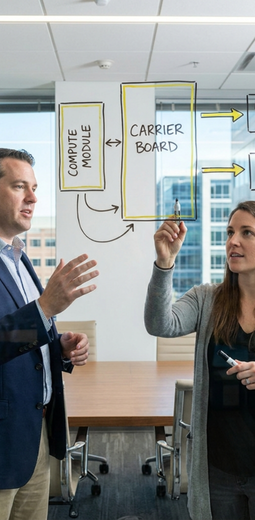
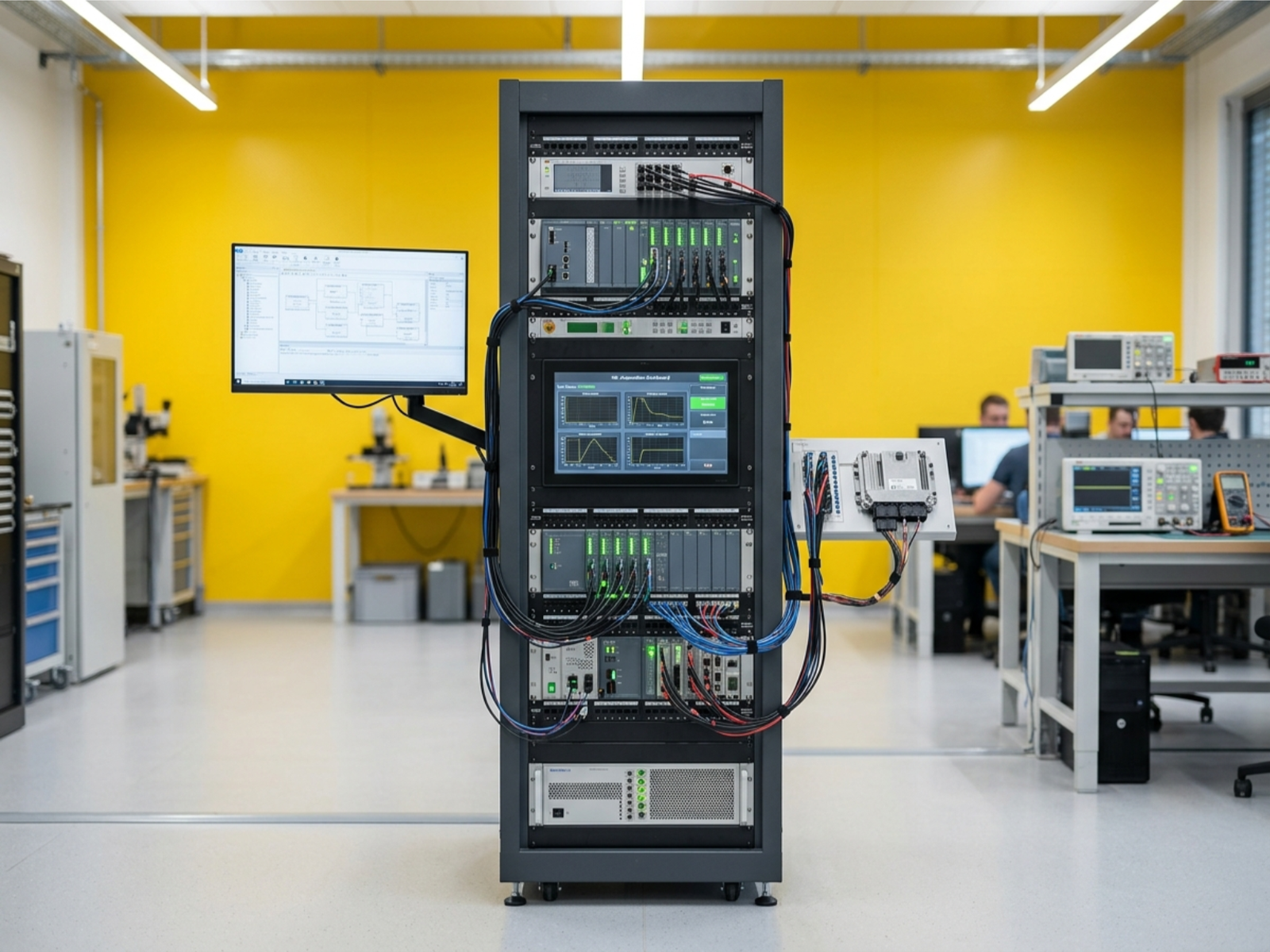
Validation That Keeps Pace With Every Release.

Test infrastructure that proves the device works, release after release.

Better Devices builds the HIL rigs, automation, and CI/CD that validate a device on real hardware, turning repeated bench checks into repeatable infrastructure as the product scales.

Release velocity grows without growing manual validation effort.

The Device Testing Infrastructure Services

Each stands alone. Together they turn device validation into repeatable infrastructure. Select to expand.

01

Device Testing Strategy

SERVICE 01 · TESTING
Find the highest-leverage validation path before investing in infrastructure.

Strong embedded teams do not test everything equally. They identify where failures are most likely, where the product carries the highest operational risk, and where automation or HIL infrastructure will create the greatest increase in confidence for the available time, budget, hardware maturity, and engineering capacity.

Discuss this service →
DELIVERABLES
AThe highest-value validation coverage for the architecture, risk profile, and release cadence
BThe right mix of unit, integration, bench, HIL, manual, and automated regression testing
CWhere automation creates leverage and where manual validation remains sufficient
DRelease gates, acceptance criteria, and implementation priorities
02

HIL & Bench Test Infrastructure

SERVICE 02 · TESTING
Build the physical validation environment around the device, not the other way around.

Sophisticated embedded products need test environments that reflect how the device behaves in the real world: the signals it reads, the interfaces it drives, the timing it depends on, the faults it must handle, and the operating states it moves through.

Discuss this service →
DELIVERABLES
ARepeatable validation against real device signals, loads, interfaces, and operating states
BCoverage across analog/digital I/O, onboard buses, inter-device networks, and wireless links
CClosed-loop test environments that exercise behaviour under realistic conditions
DSignal simulation, device emulation, load emulation, and physical fault injection
03

Embedded Test Automation

SERVICE 03 · TESTING
Turn repeated validation into a system that runs without a human in the loop.

As embedded products mature, repeated bench validation becomes one of the highest-leverage workflows to automate. Firmware changes, hardware revisions, configuration variants, and regression scenarios all need to be exercised consistently without consuming senior engineering time for every test cycle.

Discuss this service →
DELIVERABLES
AAutomated device flashing, provisioning, configuration, and state setup
BSoftware control of power supplies, signal generators, analyzers, DAQs, relays, and loads
CRepeatable functional, regression, timing, interface, power, and fault-condition tests
DScheduled runs across builds, nightly cycles, release candidates, or hardware revisions
04

CI/CD for Embedded Devices

SERVICE 04 · TESTING
Connect firmware development to automated validation on real hardware.

A green software pipeline can prove that firmware builds. Embedded CI/CD has to go further: managing physical devices, firmware flashing, device state, test resource scheduling, hardware resets, measurement capture, and deterministic teardown between runs.

Discuss this service →
DELIVERABLES
AAutomated firmware builds, flashing, provisioning, and device state management
BTest-resource scheduling across shared hardware and device pools
CHardware resets, measurement capture, and deterministic teardown between runs
DValidation of firmware changes against real device behaviour before release
Estimate a realistic device development budget in minutes, before committing to a direction.
Try the cost calculator
Featured case · Testing
Testing case study
20 min a two-week manual regression cycle, replaced.

Two weeks of manual regression, down to minutes.

Better Devices built a fully automated hardware-in-the-loop framework for a global consumer-electronics company, replacing a two-week, two-engineer regression cycle with a 20-minute automated run.

01 Automated HIL test-and-validation framework
02 Regression on real hardware, every build
03 Field findings fed back into product development
Read the case study

Reduced reliance on manual effort and improved how we approach complex issues across diagnostics, testing, and development.Senior Engineering Leader, Global Consumer Electronics Co. · NDA

Start at the uncertainty

Engagement models that match the decision stage.

Scroll through the timeline to step through each stage.

Validation is focused on the risks that matter most, per unit of time invested.

STAGE

Testing effort is spread thin, with no view of where failures actually hide.

SERVICE

Device Testing Strategy

A controlled, repeatable environment exercises real device behaviour.

STAGE

Bench checks cannot reproduce the timing, fault, and edge-case conditions that matter.

SERVICE

HIL & Bench Test Infrastructure

Flashing, setup, execution, and measurement run without a human in the loop.

STAGE

Repeated validation consumes senior engineering time on every cycle.

SERVICE

Embedded Test Automation

Every change is validated on real devices before release.

STAGE

Firmware changes ship without being tested against real hardware.

SERVICE

CI/CD for Embedded Devices

A complete, automated validation system, from strategy to release gates.

STAGE

Validation has to scale with a growing fleet and release cadence.

SERVICE

Full Testing Infrastructure

Each service is useful independently. Together, they create a grounded basis for the device development commitment.

Latest articles & industry insights

View more Insights


FREQUENTLY ASKED QUESTIONS

Straight, technical answers from the engineers who do the work, no sales layer in between.

Book a 30 min call

Can hardware built elsewhere be tested?

Yes. Test engagements routinely start from an existing device, firmware base, or third-party design.

What does a hardware-in-the-loop setup actually require?

A defined interface to the device, the signals worth exercising, and the failure modes worth catching, the rig is built around those.

Does the work cover both automated and manual testing?

Both. Automated regression on real hardware for cadence, and targeted manual testing where judgement matters.

Which wireless and connectivity standards are tested?

Bluetooth LE, Wi-Fi, LoRa, LTE-M / NB-IoT, and custom RF, exercised against real conditions, not just bench ideal.

Can testing plug into an existing CI/CD pipeline?

Yes. Hardware test stages can be scheduled inside an existing pipeline so device behaviour is validated on every change.

Does this replace an in-house QA team?

No. It gives the QA team a reliable, repeatable rig and real release gates, not a substitute for their judgement.

Validate with confidence.